

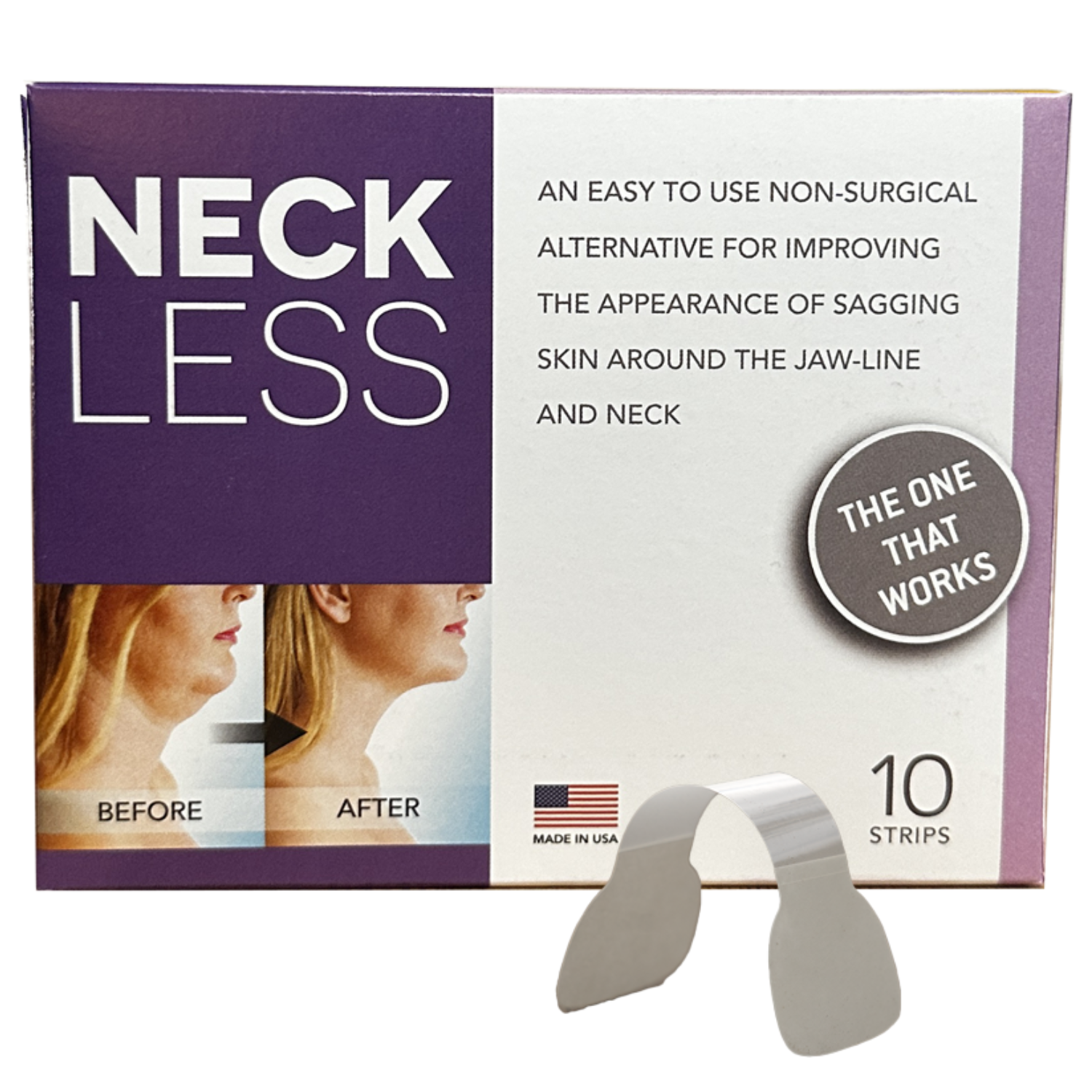
Neck Tape Before and After: Real Results from Real Women
If you have been researching turkey neck solutions for any length of time, you have probably seen neck tape before and after photos. Some of them look remarkable. Some look like wishful thinking. And if you are like most women, your first question is a reasonable one: are those results real, and could I actually get them?
This article answers that honestly. It covers what neck tape can and cannot do, what real results actually look like and why, and what separates products that deliver from the ones that disappoint. No before and after photos that exist only to sell you something. Just a clear picture of what to expect.
If you are earlier in your research and still working out what is causing your neck laxity in the first place, this breakdown of the science behind turkey neck is a useful starting point. If you already know the cause and you are here to evaluate solutions, read on.
What Neck Tape Actually Does
The term "neck tape" covers a wide range of products, and that range matters a great deal when you are evaluating before and after results. Understanding the difference between product categories explains most of the variation you see in results.
At the basic end of the spectrum are standard adhesive strips and fashion tapes repurposed for neck use. These were designed to hold fabric in place, not to lift and reposition skin. They can provide minimal support but lose adhesion quickly when exposed to moisture, sweat, or the movement of daily activity. Results from these products are inconsistent and short-lived, which is why many women have tried "neck tape" and concluded that the category does not work.
At the other end of the spectrum are medical-grade lifting strips specifically engineered for skin contact and submental support. These are a genuinely different product. They apply a directional lifting vector to the tissue under the chin, physically repositioning the skin upward toward the jawline. The result is immediate and holds through a full day of wear because the adhesive is designed for sustained skin contact rather than fabric grip.
When you see a before and after result that looks genuinely significant, it is almost always from the second category. When you see a result that is minimal or inconsistent, it is usually from the first. The category matters more than any other variable.
What Real Results Look Like
Here is what women who use medical-grade lifting strips consistently describe:
The jawline becomes more defined. The most visible result is a cleaner line between the chin and neck. Laxity that previously softened the jaw profile is lifted upward, restoring a more distinct separation between the face and neck.
The under-chin pocket reduces visibly. The submental area, the pocket directly under the chin that often becomes the most visible sign of turkey neck, lifts and flattens. In direct light and in photos, this change is significant.
The neck appears longer. When the tissue under the chin is repositioned upward, the neck visually elongates. This is a secondary effect that women often describe as one of the most noticeable changes in photos.
The result holds through the day. Medical-grade lifting strips are designed to maintain adhesion through normal activity. Women report wearing them through full workdays, events, and outdoor activities without the strip slipping or losing its lift.
The result is invisible under clothing. Because the strip is applied to the neck and covered by the collar or jawline, it is not visible in the way a visible tape line would be. The result reads as natural rather than constructed.
What Results Are Not Realistic
Honest before and after coverage has to include this part.
Neck tape does not tighten skin at a cellular level. It does not stimulate collagen production, improve skin texture, or produce any change that persists after the strip is removed. The result is immediate and physical while the strip is worn, and it returns to baseline when the strip comes off. If you are looking for a cumulative improvement that builds over time, non-surgical tightening options like energy-based treatments work differently and may be worth considering alongside a lifting strip routine.
Results also vary based on the degree of laxity. Women with mild to moderate laxity tend to see the most visually striking results because there is meaningful tissue to reposition and the skin has enough elasticity to hold the new position cleanly. Women with more significant or advanced laxity will still see a result, but it will be a less dramatic transformation. The strip lifts what is there. It cannot replace tissue that has redistributed substantially over many years.
And application matters. A strip placed in the wrong position or without the correct tension vector will not produce the result the product is capable of. This is one of the most common reasons women try a lifting strip and feel underwhelmed, and it is entirely correctable with better application technique.
What Separates the Products That Work
If you have read any other coverage of neck tape before and after results, you have probably noticed that results vary wildly across products. There are a few specific factors that explain most of that variation.
Medical-grade adhesive. The adhesive has to be designed for extended skin contact. Products using standard fabric adhesive fail because they were not built for this application. Medical-grade adhesive maintains its grip through moisture, movement, and a full day of wear without causing skin irritation.
Correct strip geometry. The shape and placement of the strip determines the direction and strength of the lift. A strip that is too narrow, too short, or placed at the wrong angle will not generate the mechanical lift that produces visible results. Products engineered specifically for submental support have geometry designed to work with the natural contours of the neck and jaw.
Made for skin, not fabric. This sounds obvious but it disqualifies most of the cheap products in this category. If the product was not designed from the ground up for use on skin in the submental area, the results will reflect that.
Neck Less lifting strips were developed by an aesthetician specifically for neck and jawline support. They are patented, made in the USA, and designed around the specific mechanics of lifting submental tissue. The adhesive is medical grade. The strip geometry is engineered for directional lift. And because they were built for this specific purpose rather than adapted from another product category, the results reflect that precision.
For women who want to test results before committing to a larger supply, the 10-strip pack is the right starting point. Women with shorter hair who need a slightly different application approach should look at the No Trace Bundle, which is specifically designed for pixie and bob lengths.
Application: Why It Changes Everything
The single most common reason women try a neck lifting strip and feel underwhelmed is application error. This is worth addressing directly because it is so correctable.
The most important variable is placement. The strip needs to be positioned below the visible laxity, not on top of it, so the tension vector pulls the tissue upward rather than pressing it flat. A strip placed too high on the neck will not produce meaningful lift. A strip placed too low will produce lift but not in the right location. The target area is the soft tissue directly below the chin and along the lower jaw.
The second variable is skin prep. Any skincare product on the neck at the time of application, including moisturizer, neck cream, or body lotion, will reduce adhesion. Clean, dry skin is the starting condition for best results. Apply skincare to your face first, let it absorb fully, then apply the strip before dressing.
The third variable is tension. The strip should be applied with the skin held gently in the lifted position, not relaxed. Applying the strip while the tissue is relaxed means the adhesive bonds at the lower position rather than the lifted one, which reduces the visible result.
The Neck Less application guide walks through each of these steps in detail. Women who have tried lifting strips before and been disappointed often find that revisiting application technique with better guidance produces a result that is noticeably different from their earlier experience.
How Neck Tape Fits Into a Broader Routine
The women who get the most out of neck lifting strips tend to use them as one part of a broader approach rather than a standalone solution.
For immediate results on any given day, a lifting strip is the most reliable option available outside of surgery. It works in any lighting, holds through activity, and does not require planning more than the few minutes it takes to apply. For the longer-term picture, combining daily use with a consistent neck skincare routine addresses both the immediate appearance and the underlying skin health that determines how your neck looks a year from now. Understanding why the neck ages faster than the face is useful context for building that routine intelligently.
For women considering whether they are a candidate for clinical treatments or surgery at some point, using a lifting strip in the near term also gives you a clearer picture of what a lifted result actually looks like on your face. Some women find the result so satisfying that it changes the calculus around more invasive options entirely. Others find it confirms that they want a more permanent solution and can move toward that decision more clearly. Either way, the information is useful. A full comparison of costs and what each option delivers is in this breakdown of neck lift surgery cost versus alternatives.
The women who review Neck Less most consistently describe two things: surprise at how natural the result looks in person, and surprise at how quickly it becomes part of a normal getting-ready routine. Neither of those things shows up in a before and after photo. Both are worth knowing before you decide whether to try it.
The Bottom Line
Neck tape before and after results are real, but they vary significantly based on the product, the degree of laxity, and the application. Medical-grade lifting strips engineered specifically for submental support produce results that basic adhesive products cannot match. The result is immediate, physical, and visible in any lighting while the strip is worn. It does not persist after removal, and it works best on mild to moderate laxity with correct application technique.
If you have been skeptical of before and after claims in this category, that skepticism is earned. The category has a lot of cheap products that do not deliver. But the skepticism does not apply equally to everything in it. The right product, applied correctly, produces a result that is genuinely worth seeing for yourself.
Ready to see your own result? Shop Neck Less lifting strips in 10, 25, 50, or 100-pack options. Patented. Made in the USA. 30-day money-back guarantee.
Hope Granger is a beauty and wellness writer who has spent over a decade covering non-surgical skincare, aging gracefully, and women's confidence. She writes for women who are done being sold false promises and just want honest answers.