

How to Fix Turkey Neck Without Surgery: 7 Options Ranked Honestly
When you Google "how to fix turkey neck," almost everything that comes back is from a plastic surgery clinic. The before and afters are dramatic. The results are real. And the price tag is somewhere between $5,000 and $15,000, plus weeks of recovery, anesthesia, and all that comes with it.
For some women, surgery is exactly the right answer. But for most of us — especially those who are earlier in this process, or simply not interested in going under the knife — there are genuinely good alternatives. Some work better than others. Some are overpriced for what they deliver. And a few are so simple and inexpensive that it's almost frustrating they don't get more attention.
Here's an honest ranking of seven non-surgical options, based on what the evidence actually supports. If you want to understand why turkey neck happens in the first place, that context helps make sense of which option is right for where you are.
1. SPF on Your Neck — Every Single Day
Cost: Whatever your sunscreen costs | Speed: Prevention | Effectiveness: ★★★★★
I put this first because it's the most underrated move in the entire conversation. A landmark study in the Journal of Investigative Dermatology found that UV exposure accounts for approximately 80% of visible facial and neck aging. Not time. Not genetics. Sun.
Most of us apply SPF to our faces without thinking and completely skip the neck. The area most prone to showing age is the area that gets the least protection. You don't need a separate product. You just need to take an extra three seconds and keep going past your jawline.
This won't reverse what's already happened. But if you're in your 30s or 40s and noticing the first signs, slowing further UV damage is the single most effective long-term move available to you. It costs essentially nothing.
2. Daily Physical Support with Medical-Grade Lifting Strips
Cost: $30–$80 per box | Speed: Immediate | Effectiveness: ★★★★★
This is the category most people have never heard of, and it genuinely surprised me when I first came across it.
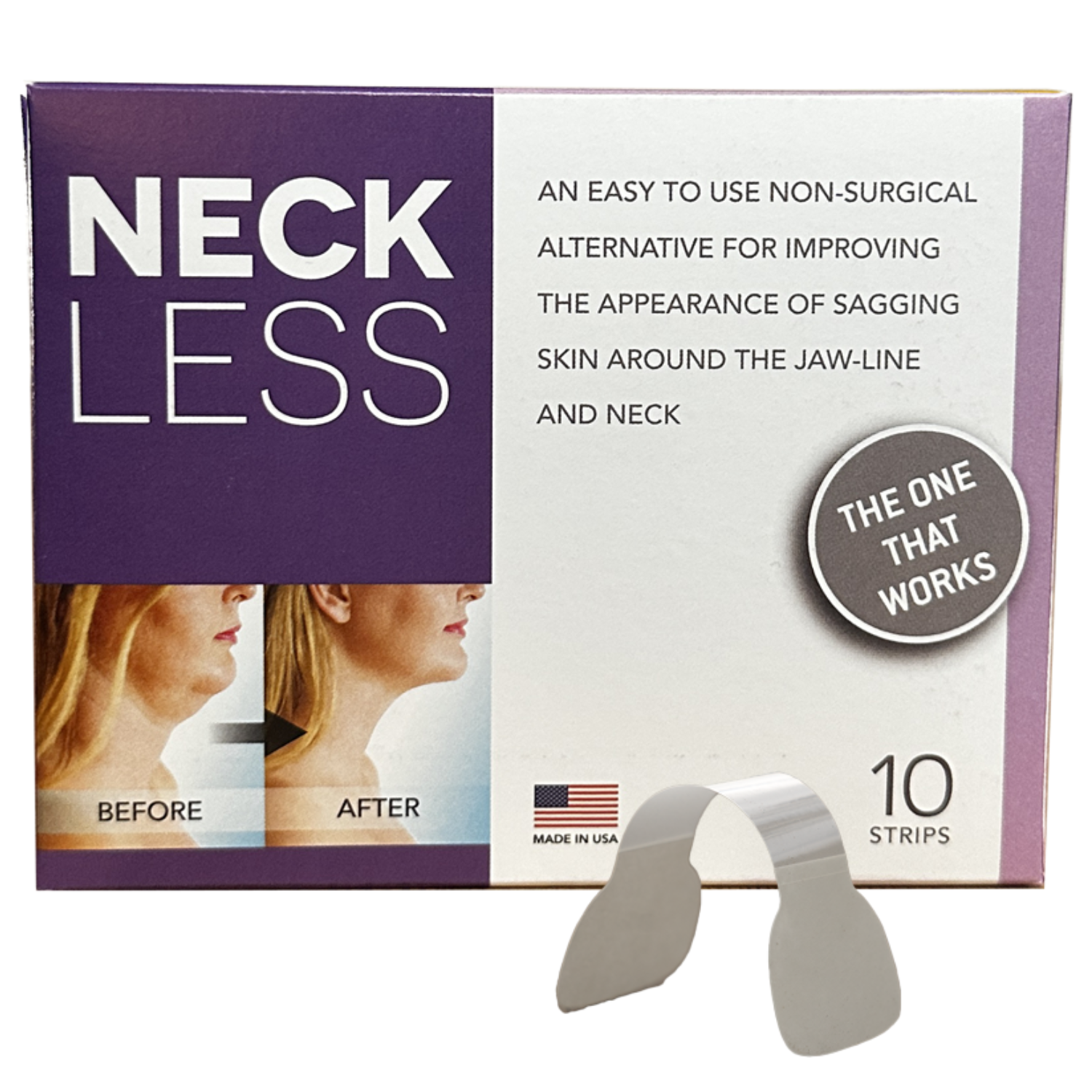
Neck Less is a patented, medical-grade lifting strip developed by aestheticians specifically for turkey neck and sagging neck skin. You apply it in seconds — it sits beneath your hair, invisible — and it physically lifts and smooths the neck area for up to 10 hours. You see the difference the moment you put it on. Here's exactly how to apply it.
It's not a cream that promises results in eight weeks. It's not a treatment that requires three sessions before you notice anything. It works the same morning you try it. The 30-day money-back guarantee means you're not risking anything to find out, and the reviews from other women speak for themselves.
3. Retinoids and Peptide Serums
Cost: $30–$150+ | Speed: 8–12 weeks | Effectiveness: ★★★★
These two ingredients are probably the most evidence-backed topicals for skin structure. Retinoids speed up cellular turnover and signal the skin to produce more collagen. Peptides support the same process from a different angle, essentially giving skin the building blocks it needs to maintain firmness.
They genuinely work over time. The catch is that they don't physically lift anything. If gravity has been winning for a few years, no serum is going to reverse that on its own. These are long-game ingredients — worth using, worth being consistent with, but realistic about what they can and can't do.
One thing most women get wrong: they apply everything to their face and stop at the jaw. Your neck needs these ingredients too. Probably more.
4. Neck Exercises
Cost: Free | Speed: Weeks to months | Effectiveness: ★★★ for muscle tone
Chin tucks, platysma stretches, and other neck-focused exercises can genuinely improve muscle tone over time. The platysma muscle, which runs from your chest to your jawline, weakens and separates with age — and targeted exercises do help maintain it.
The honest limitation: exercises improve what's happening underneath the skin, but they can't tighten skin that has lost its elasticity. If the laxity is primarily muscular, exercises will make a noticeable difference. If it's primarily about collagen loss and skin structure, the results will be more modest.
Still worth doing. They're free, there's no downside, and maintaining what you have is always a reasonable strategy. Just don't expect them to do the heavy lifting alone.
5. Radiofrequency and Microneedling
Cost: $1,500–$4,000+ | Speed: 2–3 months | Effectiveness: ★★★★ for mild to moderate concerns
Treatments like Morpheus8 use heat delivered through tiny needles to stimulate collagen production in deeper layers of skin. They work, and the evidence for radiofrequency in general is reasonably solid. Studies published in Dermatologic Surgery have shown measurable improvements in skin laxity with multiple sessions.
The caveats are real though. You typically need three to six sessions to see optimal results. Cost per session can run $500 to $1,500 depending on where you are. Results build gradually over months, not days. And maintenance sessions are usually recommended to sustain the improvement.
Worth exploring if you have the budget and want a clinical option that doesn't involve surgery. Worth being clear-eyed about the investment it actually requires.
6. Ultrasound Therapy (Ultherapy)
Cost: $2,000–$5,000 | Speed: 3–6 months | Effectiveness: ★★★ for mild tightening
Ultherapy is FDA-cleared for non-invasive lifting and uses focused ultrasound energy to stimulate collagen in the deeper structural layers of skin. It's one of the more scientifically credible non-invasive options out there.
The results are real but subtle — and that distinction matters when you're spending this kind of money. It works best on women with mild to moderate laxity who are looking for gradual improvement rather than a dramatic change. One session typically lasts up to 12 months. Some women need more than one.
The cost-to-result ratio is something to think carefully about. For early concerns, it may be more than you need. For moderate laxity, it can be a reasonable middle ground between topicals and surgery.
7. Over-the-Counter Neck Firming Creams
Cost: $15–$80 | Speed: Minimal | Effectiveness: ★★ for hydration
I want to be fair here because some of these creams do exactly what they're designed to do — they moisturize well, some contain peptides or caffeine that provide temporary tightening, and a few have brightening ingredients that improve overall texture.
What they don't do is lift turkey neck. Not really. The marketing suggests otherwise, and the before and afters are almost always taken in dramatically different lighting. If your concern is dryness or crepey texture, a good moisturizer with supportive ingredients is genuinely helpful. If your concern is visible sagging, a cream is a supporting player at best.
Don't let the price point lead you into thinking something is working when the change you're hoping for requires a different tool.
The Combination That Actually Works
The women who see the most meaningful results aren't usually doing one dramatic thing. They're doing a few simple things consistently.
SPF every morning. A good retinoid or peptide serum extended down to the neck. And daily support from something like Neck Less that handles the visible lift while the longer-term work happens underneath. You're addressing the problem from three angles at once — protection, regeneration, and immediate appearance — without a single appointment or procedure.
It doesn't require a lot of time or money. It just requires treating your neck like it deserves the same care as the rest of you.
Ready to see the difference for yourself? Neck Less gives you a smoother, firmer-looking neck in seconds. Non-surgical. Invisible. 30-day money-back guarantee. Shop Neck Less | See How It Works
Hope Granger is a beauty and wellness writer who has spent over a decade covering non-surgical skincare, aging gracefully, and women's confidence. She writes for women who are done being sold false promises and just want honest answers.