

How to Hide Turkey Neck: Clothing, Makeup and More
Most turkey neck advice falls into one of two categories. Either it tells you to "just accept yourself" in a way that feels dismissive, or it pushes you toward a $12,000 surgical procedure as though that's a reasonable Tuesday afternoon suggestion. There's not a lot of honest coverage of the middle ground: the practical, immediate things you can actually do to look and feel better today.
This is that middle ground. Whether you have an event next weekend, a video call in an hour, or just want to feel more like yourself when you get dressed in the morning, here are the clothing, makeup, and support options that actually work for turkey neck, along with the ones that will make things worse, which nobody ever talks about.
First, What We Mean by "Turkey Neck"
Turkey neck is the informal term for loose, sagging, or crepey skin in the neck and submental area, just below the chin. It shows up differently for different women. Some notice horizontal necklace lines. Some see vertical platysma bands running from the chest to the jaw. Some just see general looseness under the chin that wasn't there a few years ago.
The cause is a combination of collagen loss, weakened neck muscles, sun exposure, and in many cases the hormonal changes that come with perimenopause and menopause. It is not a sign that you did anything wrong. And the approaches that actually work depend a little on which type of change you're dealing with.
If you want a deeper dive into what's actually driving the changes in your neck, this breakdown of why neck skin ages differently covers the biology in plain language.
The Clothing Approach: What Works and What Backfires
Clothing is the most immediately accessible tool for managing how your neck looks, and there's more nuance here than most style guides acknowledge. The conventional wisdom gets some of it right and some of it meaningfully wrong.
The Turtleneck Problem
Turtlenecks are the first thing most women reach for when they start noticing neck changes. The logic makes sense: cover the neck completely, problem solved. But in practice, a snug traditional turtleneck often does the opposite of what you want.
A close-fitting neckline draws the eye directly to the chin and jaw area, which is exactly where most women don't want attention. If there's any fullness under the chin or looseness at the jaw, a turtleneck frames it rather than concealing it. Dark colors right under your face deepen shadows. And if you have a shorter neck, the visual effect can make the whole area look compressed.
The turtleneck that works best for mature necks is actually a mock neck or a loose cowl neck, not the fitted classic version. The cowl in particular is forgiving because it drapes softly, draws the eye toward the chest rather than the jaw, and doesn't create the tight band effect that makes sagging skin more visible.
Necklines That Actually Help
V-necks and scoop necks. Counterintuitive but genuinely effective. A V-neck or soft scoop neck draws the eye downward and inward, creating a vertical line that elongates the neck and pulls focus away from the chin area. This is one of the most consistently recommended approaches from professional stylists who work with women over 50.
Cowl necks and draped necklines. Soft, loose, drapey fabric around the neck softens the silhouette without creating a hard frame. The movement and texture add visual interest that distracts from any tightness or sagging. Chiffon, jersey, and cashmere work particularly well.
Collared shirts with the collar open or slightly popped. A relaxed collar creates soft framing without drawing a tight line across the neck. The key is keeping the collar open rather than buttoned to the top, which recreates the turtleneck problem.
Scarves, worn loosely. A lightweight scarf draped loosely around the neck provides coverage while adding softness and color. The trick is loose. A tightly wound scarf at the throat has the same drawbacks as a turtleneck. Let it drape naturally. Silk and chiffon work better than thick knits, which add bulk.
What to Avoid
Chokers and short necklaces. These create a hard horizontal line across exactly the area you want to de-emphasize. Save the long pendants and layered chains for drawing the eye downward instead.
Crew necks that sit at the base of the throat. These frame the chin and jaw area without providing any coverage. The worst of both worlds.
Dark colors right under the face. Black turtlenecks and dark crew necks increase contrast between the clothing and your skin, creating shadows that emphasize any sagging or looseness. Lighter, softer colors near the face are more flattering.
The Makeup Approach: Contouring for the Neck
Neck contouring is genuinely having a moment on social media, and for good reason. It works, at least partially, when done correctly. The technique uses light and shadow to create the illusion of a firmer, more defined neck. Understanding what it can and can't do will save you a lot of frustration.
What Neck Contouring Actually Does
Contouring works by applying darker product in areas you want to visually recede, and lighter product in areas you want to bring forward. For the neck specifically, this means applying a contour shade slightly darker than your skin tone in the hollow or "divot" created by loose skin under the chin, and a highlight or lighter concealer on the front and center of the neck to bring that plane forward.
The effect creates the illusion of a more defined jawline and a smoother neck profile. It doesn't eliminate sagging skin, but it can meaningfully reduce how visible it is from the front and in photos, which is what most women are actually concerned about.
How to Do It
Use cream, not powder. Powder products on mature neck skin tend to settle into lines and texture, making them more visible rather than less. A cream contour stick or matte cream bronzer gives a more blended, natural-looking result.
Apply the contour in the shadow. Find the area of loose skin or fold beneath your chin. Apply the darker contour shade there, exactly where the shadow naturally falls. This reinforces what the eye already reads as shadow, rather than creating an unnatural new line.
Highlight the center front of the neck. A light concealer or highlighter applied down the center column of the neck brings that plane forward visually, creating a more defined look.
Blend thoroughly with a damp sponge. The biggest mistake with neck contouring is leaving visible edges. A damp makeup sponge blends more seamlessly than a brush on textured skin. Take your time here.
Set lightly with a translucent powder if needed. Just enough to prevent transfer. Not so much that it layers onto and emphasizes skin texture.
The Honest Limits of Makeup
Neck contouring lasts until it transfers, sweats off, or gets photographed in direct flash lighting, which is not forgiving to contouring of any kind. It requires some skill to apply naturally, and it's more effective for horizontal necklace lines than for significant skin sagging or platysma bands. For events, photos, and everyday wear in natural light, it can genuinely make a visible difference. For harsh flash photography or very close-up video, results are more variable.
Support Solutions: The Immediate Lift Option
Clothing and makeup address the visual perception of turkey neck. Support solutions physically change what the neck actually looks like while they're being used. This is a different category entirely, and for many women it's the most effective of the three.
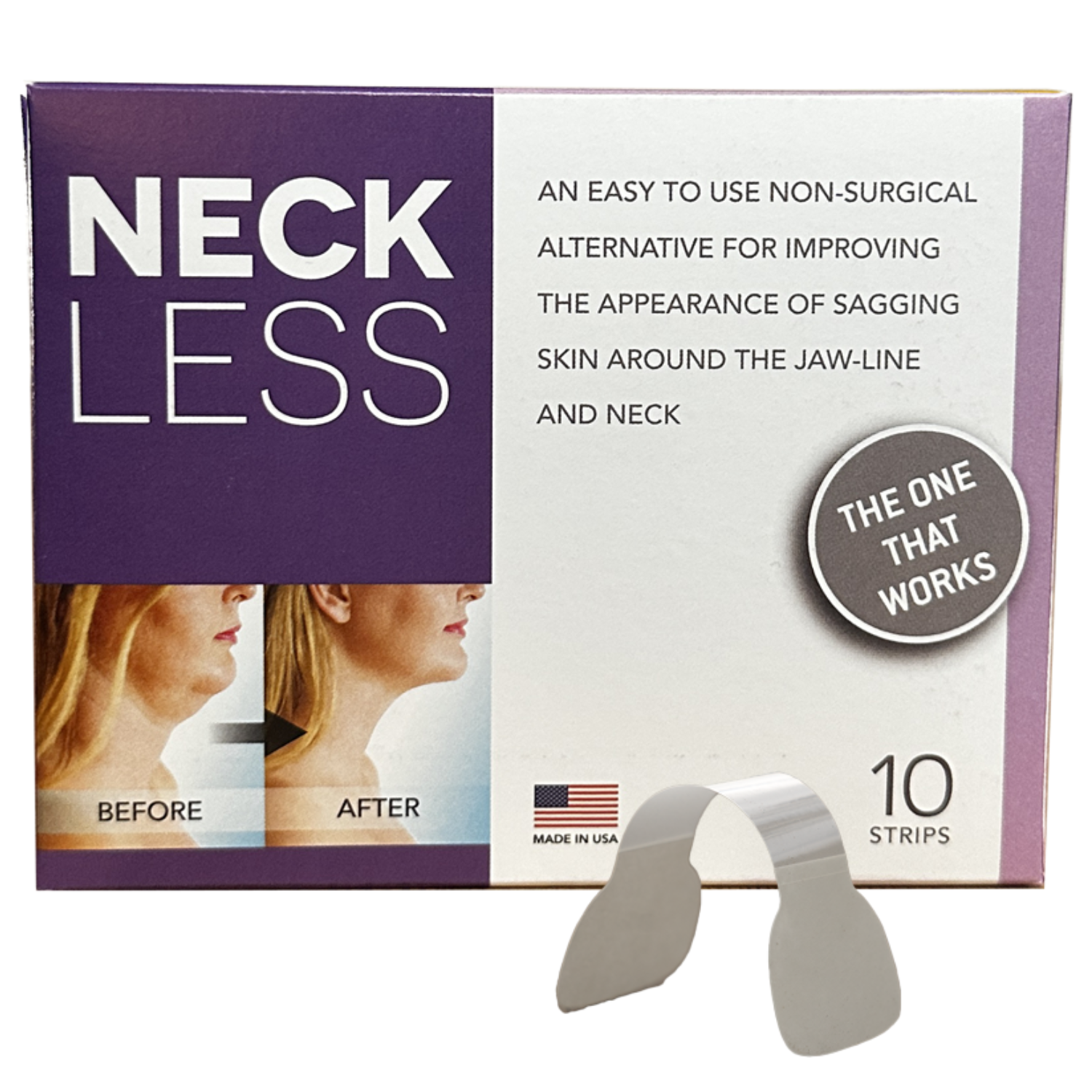
Medical-grade neck lifting strips are the most direct option in this category. Neck Less uses a patented adhesive strip that anchors behind the ears and physically lifts and smooths the neck area for up to 10 hours. The effect is visible in the mirror within 30 seconds of application. It doesn't require any skill to use, it doesn't transfer or sweat off, and it works in direct lighting and on camera in a way that makeup alone rarely achieves.
We did an honest breakdown of how neck lifting strips actually work and how to tell genuine medical-grade products from the knockoffs that don't hold past lunch. That breakdown is worth reading before you buy anything in this category. The short version: the adhesive quality and the specific design of the strip matter enormously, and most cheap alternatives on Amazon and overseas marketplaces fail on both counts.
Not sure where to start? The 10-strip trial pack is the lowest-commitment way to try Neck Less before deciding on a larger supply. Most women know within the first morning whether it's going to be part of their routine.
The strips sit under the hair and are invisible in most hairstyles. For shorter hair, the Neck Less No Trace Bundle for Short Hair includes a professional concealer kit so the strip can be completely hidden regardless of hair length.
Combining All Three Approaches
The women who feel most confident managing turkey neck long-term usually land on some combination of all three approaches, used situationally.
For everyday life: Clothing choices are the lowest-effort, highest-consistency tool. Building a habit of reaching for V-necks, cowl necks, and loose scarves instead of crew necks and fitted turtlenecks takes almost no extra time and pays off every day.
For photos, events, and video calls: A lifting strip worn under hair gives you the physical result that clothing and makeup can only approximate. For women who appear on camera regularly or have important occasions coming up, this is worth having in your routine. See what other women are saying about their results.
For close-up photos and nights out: Neck contouring on top of a lifting strip gives you the most polished result in controlled lighting. The strip lifts the physical structure. The contour refines the visual definition. Together they're more effective than either alone.
What None of These Approaches Will Do
Worth saying plainly: clothing, makeup, and lifting strips all address how turkey neck looks in the moment. None of them address the underlying biology. If you want to work on the actual collagen loss and skin laxity driving the changes, that's a longer-term project involving retinoids, SPF, and potentially clinical treatments.
The honest breakdown of at-home neck tightening options covers what actually works over time, with realistic timelines. For most women, the best approach is some combination: immediate support for the days when you want to look your best right now, and longer-term care for the underlying skin health that compounds quietly in the background.
Both are worth doing. They're not mutually exclusive, and neither requires a surgeon.
The Bottom Line
Turkey neck is one of the most common concerns among women over 40, and it has more practical, accessible solutions than most people realize. The right clothing necklines can make an immediate difference without any extra time or products. Neck contouring with cream products can refine the appearance further in the right lighting. And medical-grade lifting strips can provide a physical result that neither clothing nor makeup can replace.
The best version of this isn't picking one approach and sticking with it. It's knowing which tool to reach for depending on what the day requires, and having all three available when you need them.
Ready to try the support solution that works in any lighting? Shop Neck Less lifting strips in 10, 25, 50, or 100-pack options. Patented. Made in the USA. 30-day money-back guarantee.
Hope Granger is a beauty and wellness writer who has spent over a decade covering non-surgical skincare, aging gracefully, and women's confidence. She writes for women who are done being sold false promises and just want honest answers.