

Why Your Neck Changed Overnight at Menopause
One morning you looked in the mirror and your neck wasn't yours anymore.
That's how almost every woman over 45 describes it. There wasn't a gradual realization. There was a specific moment, a photograph at a wedding, a video call where your face looked fine but your neck looked different, a glance in the bathroom mirror, and you saw it. And once you saw it, you couldn't unsee it.
You weren't imagining anything, and the timeline isn't your imagination either. There's a real biological reason your neck changed seemingly overnight in your late 40s or early 50s, and it has very little to do with how you've taken care of yourself. It's about estrogen, collagen, and the specific way menopause hits the neck harder than almost anywhere else on your body.
Here's what's actually happening, and what you can do about it now. Not in eight weeks. Starting today.
The Real Reason Your Neck Changed at Menopause
Estrogen is the part of the story most women aren't told.
For decades, your body produced estrogen at relatively steady levels. Estrogen does many things, but one of its quietest jobs is keeping your skin firm. It signals fibroblasts (the cells that produce collagen) to keep working. It supports skin hydration. It helps maintain elastin. It keeps the skin's structural framework intact.
Then perimenopause arrives, often somewhere between 45 and 52, and estrogen levels begin to drop. By the time you reach full menopause, estrogen is a fraction of what it once was. And your skin notices fast.
A study published in the journal Climacteric found that women lose approximately 30% of their skin collagen in the first five years after menopause, then continue to lose roughly 2% per year afterward. To put that in perspective, in the five years around menopause, you can lose more collagen than you lost in the entire previous decade combined. That's why it feels sudden. Biologically, it almost is.
Why the Neck Specifically Falls Apart First
The neck is the canary in the coal mine for hormonal aging.
Compared to your face, your neck has thinner skin, fewer oil glands, less natural moisture, and decades of unprotected sun exposure because most women's SPF routines have always stopped at the jawline. The neck was already aging faster than your face long before menopause. When estrogen drops, the neck has the least structural reserve to absorb the hit.
Add to that the platysma, a thin sheet of muscle running from your chest up to your jawline. As estrogen declines and muscle tone changes, the platysma weakens and can begin to separate, creating those vertical bands that show up in your 50s and seem permanent. And underneath all of it, fat redistribution kicks in. Estrogen helps keep fat where it has been. Without it, fat shifts. The submental area, just under the chin, is one of the first places that change becomes visible.
Three things happening simultaneously, all driven by the same hormonal shift, all converging on the same square inches of skin. It's not your imagination. It's biology stacking the deck against one of the most exposed parts of your body.
Why It Feels Overnight (When It Actually Wasn't)
Here's the part that's hard to hear, and the part that ultimately makes it easier to accept. The changes were happening for years before you saw them.
Skin loses elasticity gradually. Collagen depletes incrementally. The platysma weakens slowly. None of it is sudden. But there's a threshold, a point where the cumulative changes cross from invisible to visible, and that threshold tends to coincide with menopause because the menopausal collagen drop is so steep that the curve goes from gentle to nearly vertical.
You didn't fail to notice. The changes were genuinely too small to see. Then one week they crossed into the visible range, and your eye picked them up all at once. That's why it feels like overnight. Biologically it took ten years. Visually it took ten days.
Once you understand this, two things become clearer. First, you didn't do anything wrong. Second, the same way the changes accumulated invisibly, the right interventions can also accumulate quietly, and some of them work much faster than the years it took the damage to add up.
What Actually Works After 50
Here's where I want to be honest with you, because the marketing in this space is exhausting and most of it is aimed at women in their 30s who don't have menopause-driven changes yet.
For women over 45 dealing with sudden, visible neck changes, here's the realistic ranking of what actually works, by speed, not by marketing volume.
1. Medical-Grade Lifting Strips (Same-Day Result)
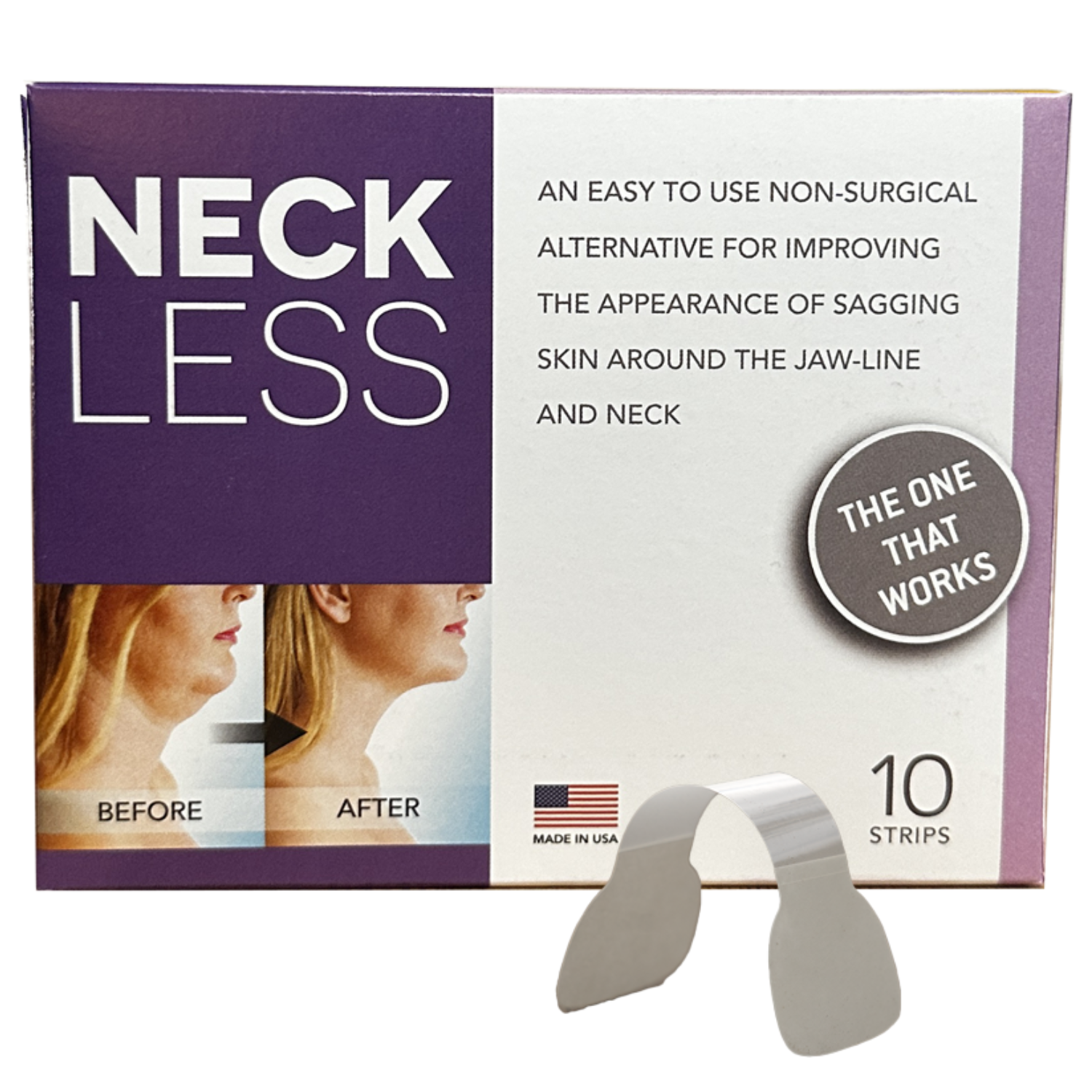
This is the only at-home option that delivers a visible lift on the same day you start using it. Neck Less is a patented, medical-grade strip developed specifically for sagging neck skin. You apply it in seconds, it sits beneath your hair invisibly, and it physically lifts and smooths the neck for up to 10 hours.
The reason it ranks first for this reader is straightforward. Every other intervention requires patience. Topical ingredients need eight to twelve weeks to do anything measurable. Devices need months. Hormonal interventions take time. Lifting strips give you a visible change in the bathroom mirror the morning you try them, which matters when you're getting ready for an event next week, not next year. Application takes under 30 seconds once you've done it a few times.
It's not a permanent change to the underlying tissue. But for women who want to look in the mirror and feel like themselves again, particularly during a phase when so many other things are shifting, it's the most direct intervention I've found.
2. Topical Estrogen Cream (For Some Women)
For women whose menopausal changes are significant, talk to your doctor about topical estrogen creams designed for skin. Some dermatologists prescribe estradiol-containing topical formulations that can partially offset the local estrogen deficit in the skin.
The evidence base is mixed but real. Studies have shown measurable improvement in skin thickness and elasticity with consistent use. The honest caveat: this is a medical decision, not a beauty one, and it's not appropriate for everyone, particularly women with a history of estrogen-sensitive cancers. This conversation belongs with your gynecologist or dermatologist, not your aesthetician.
3. Retinoids (8 to 12 Week Patience Required)
Retinoids signal skin to produce more collagen and accelerate cellular turnover. The evidence for them in postmenopausal skin is genuinely strong. The problem is the timeline. You won't see meaningful change for two to three months minimum.
For neck skin specifically, start with a lower concentration than what you'd use on your face. Postmenopausal neck skin is more sensitive, and you'll know within a week if you've gone too strong. Apply at night, follow with a heavy moisturizer, and be religious about SPF during the day because retinoids increase sun sensitivity.
4. Peptide Serums and Vitamin C
These are the supporting cast. Peptides signal collagen production. Vitamin C supports synthesis and provides antioxidant protection. Neither produces dramatic same-month change, but both contribute to a better long-term trajectory. Use them daily, expect to see modest improvement over six to twelve months.
5. Clinical Treatments (For Investment-Level Results)
Radiofrequency, microneedling, and ultrasound therapies (Ultherapy) genuinely work in postmenopausal women. The full breakdown of clinical options covers cost ranges, timelines, and what each delivers. The short version: $1,500 to $5,000 across multiple sessions, results building over months. Worth exploring if it fits your budget and you want a clinical option that doesn't involve surgery.
What Doesn't Work as Well as the Marketing Suggests
A few things to spend your money on more carefully.
Generic neck firming creams. Most are moisturizers with marketing copy. They make skin look temporarily plumper because they hydrate, but they don't address the structural collagen loss that postmenopausal skin needs. A real medical-grade approach is a different category of product, and it's worth understanding the difference before spending $80 on a department-store cream.
Oral collagen supplements. The evidence here is more contested than the marketing suggests. Some studies show modest improvements in skin elasticity. Others show none. The supplements don't directly replace what menopause has taken away, and the marketing often conflates "supports skin health" with "rebuilds collagen in your neck." If you take them, fine. Just don't rely on them as your primary strategy.
"Collagen-boosting" foods alone. Vitamin C, bone broth, and protein-rich diets all support skin health, but they can't compete with the rate of postmenopausal collagen decline. Eat well, but don't expect dietary changes alone to reverse what's happening structurally.
Facial yoga and exercises for the neck. They can improve muscle tone, which has some value for the platysma. But they don't address skin laxity, which is what most women in their 50s are actually concerned about. Worth doing for free, not worth investing significant time in expecting dramatic visual changes.
The Realistic Plan for Right Now
Here's what I'd suggest if you're 45 or older and you've recently had the "I don't recognize my neck" moment.
This week: Get an immediate visible result. Order Neck Less lifting strips in whichever pack size matches your usage. The 50-pack is the sweet spot for most women, enough to use daily for almost two months, which is long enough to know if you want to make it part of your routine. See what other women in your demographic have experienced if you want context first. You can also try a starter kit with 10 Neck Strips.
This month: Add SPF on your neck every morning, every day, regardless of weather. Extend whatever serum you're using on your face down to your neck and chest, particularly retinoids and vitamin C. If you're not already using a retinoid, start with a low concentration and work up.
This quarter: Schedule a consultation with your gynecologist to discuss whether topical estrogen or systemic HRT might make sense for your skin and overall health. This conversation is overdue for most women in this demographic anyway, and skin is one of many reasons it's worth having.
Ongoing: Decide whether clinical treatments (radiofrequency, microneedling, Ultherapy) fit your budget and goals. They're not necessary for everyone, but they can produce real improvement for women who want clinical-level results.
That's the realistic plan. Five things, three of which take seconds per day to implement, and one of which gives you a visible change starting tomorrow.
For Women with Shorter Hair
One specific note for the readers in this demographic who keep their hair shorter, a pixie cut, a chic crop, anything that doesn't fall past the jawline. The standard lifting strip is designed to sit invisibly under longer hair, which means concealing it can be harder if you've made the very valid choice to wear your hair short in your 50s.
For this, the Neck Less No Trace Bundle for Short Hair includes a professional concealer palette and setting powder so the strip can be completely hidden even with no hair to cover it. It's the only solution of its kind I've seen for this specific situation, and it's a real consideration for the millions of women whose hair doesn't reach below the chin.
The Bottom Line
Your neck didn't change overnight because you neglected something or did something wrong. It changed because menopause delivered a hormonal shock to a part of your body that was already aging faster than the rest of you, and the cumulative effect crossed a visible threshold seemingly all at once.
You can't reverse menopause. But you can absolutely improve how your neck looks today, this week, and over the long term, with a combination of immediate physical support, evidence-based topical care, and the medical conversations that no one had with you when you were 35.
You're not alone in this. Almost every woman in your demographic is going through some version of the same realization. The difference between feeling defeated by it and feeling on top of it is mostly a matter of having the right information and a few simple tools that actually work. You have both now.
Most of all: you didn't lose yourself when your neck changed. You're still you. You just need different tools than the ones that worked at 35.
Ready to see the difference for yourself? Shop Neck Less lifting strips in 10, 25, 50, or 100-pack options. Patented. Made in the USA. 30-day money-back guarantee.
Hope Granger is a beauty and wellness writer who has spent over a decade covering non-surgical skincare, aging gracefully, and women's confidence. She writes for women who are done being sold false promises and just want honest answers.