

Neck Skin Care Routine: The Complete Guide to Firmer, Smoother Skin
Neck skin care is having a moment, and for good reason. Searches for neck-focused products grew over 60 percent in 2025, and in 2026 neck care has moved from a dermatologist talking point to a mainstream routine category. Two things are driving it: an increased awareness that the neck ages faster and differently than the face, and the rise of tech neck, the horizontal creasing and early laxity that comes from years of looking down at phones and screens. Both are real concerns, and both respond to the right routine.
This guide covers everything you need to build an effective neck skin care routine from scratch, including the right ingredients, the right order, what to avoid, and how to combine topicals with other approaches for results that actually show. If you have already read our neck care routine guide for women over 40, this article goes deeper on ingredients and product types. If this is your starting point, you are in the right place.
Why the Neck Needs Its Own Routine
The neck is not just an extension of the face. It has genuinely different skin characteristics that require a different approach, and treating it as an afterthought of your face routine is one of the most common reasons women find themselves dealing with a neck that looks significantly older than the face above it.
Neck skin is thinner than facial skin, with fewer sebaceous glands and less natural moisture retention. It has less underlying fat and muscle support than the face, which means structural changes become visible earlier. It moves constantly through a wide range of motion, and in the era of smartphones, it spends hours a day flexed forward at angles that accelerate horizontal line formation and early laxity. UV exposure on the neck is almost always unprotected compared to the face, which compounds collagen loss significantly over years.
The result is predictable: the neck tends to show visible aging five to ten years ahead of a well-cared-for face on the same person. Understanding why the neck ages faster than the face is useful context for building a routine that addresses the specific causes rather than just the visible symptoms.
The Core Ingredients for a Neck Skin Care Routine
Ingredients matter more than products. A clear understanding of what each ingredient category does, and what it cannot do, lets you evaluate any product on its merits rather than its marketing claims.
Vitamin C
Vitamin C is the most important morning ingredient for neck skin care. It is a potent antioxidant that neutralizes free radical damage from UV exposure, the primary driver of collagen degradation in neck skin, and it actively stimulates collagen synthesis at the cellular level. Applied consistently in the morning before SPF, vitamin C both protects and actively improves the skin's structural foundation over time.
The most bioavailable form is L-ascorbic acid at concentrations between 10 and 20 percent. On the thinner, more reactive skin of the neck, start at 10 percent. If irritation develops, switch to a gentler derivative such as ascorbyl glucoside or sodium ascorbyl phosphate, which are more stable and better tolerated on sensitive skin while still delivering meaningful antioxidant and collagen-stimulating benefits.
Peptides
Peptides are the standout ingredient for neck skin care for one specific reason: they deliver real collagen-signaling benefits without the irritation risk that makes retinoids difficult to use on the neck. The neck's thinner skin and lower oil density make it more reactive to active ingredients than the face, and peptides bridge that gap.
Look for formulations containing palmitoyl pentapeptide (Matrixyl), copper peptides, or palmitoyl tripeptide-1. These signal the skin to increase collagen and elastin production, improve skin firmness over weeks and months of consistent use, and are gentle enough for twice-daily application on the neck. In 2026, peptides are the ingredient category with the most momentum in neck-specific formulations, and for good reason.
Retinoids
Retinoids, including retinol and its prescription-strength cousins, are the most clinically proven anti-aging ingredient category available. They accelerate cell turnover, stimulate collagen production, and improve skin texture and firmness with consistent use. They are also the ingredient most likely to cause irritation on neck skin, which is why they require a more cautious approach here than on the face.
For neck skin, start with the lowest available retinol concentration (0.025 to 0.05 percent) applied every third night rather than nightly. Build frequency gradually over four to six weeks as the skin acclimates. Never apply retinol on the same night as an exfoliating acid. If irritation persists even at low frequency, retinal (retinaldehyde) is a gentler alternative that converts to retinoic acid in the skin with less irritation potential. Encapsulated retinol formulations also tend to be better tolerated on the neck than standard formulas.
Hyaluronic Acid
Hyaluronic acid attracts and retains moisture in the skin, plumping and hydrating the surface layer. On its own it does not build collagen or reverse laxity, but it significantly improves the appearance and feel of neck skin by addressing the dryness and crepey texture that often develops alongside structural changes. Apply to slightly damp skin for maximum absorption and follow immediately with a moisturizer to seal it in. Look for formulas that include multiple molecular weights of hyaluronic acid for both surface and deeper hydration.
Ceramides
Ceramides are the lipids that make up the skin's barrier layer. They hold moisture in and keep irritants out. Neck skin loses ceramides faster than facial skin due to its lower oil gland density, which is why a ceramide-rich moisturizer applied in the evening is one of the most consistently beneficial additions to a neck skin care routine. Brands like CeraVe and La Roche-Posay have accessible ceramide formulas that work well for this application without breaking the budget on a product that needs daily use.
Niacinamide
Niacinamide (vitamin B3) improves skin barrier function, reduces the appearance of uneven skin tone, and has demonstrated mild collagen-stimulating effects in research. It is extremely well-tolerated on neck skin, can be layered with most other ingredients without interaction concerns, and works well at concentrations of 5 to 10 percent. If your primary neck concern is crepey texture, uneven skin tone, or general skin quality rather than laxity specifically, niacinamide is a strong addition to either the morning or evening routine.
SPF: The Non-Negotiable Step
No ingredient conversation about neck skin care is complete without addressing SPF, because no other single step has a larger impact on how neck skin ages over time. UV damage is the primary accelerant of collagen breakdown in the skin. The neck is almost universally unprotected compared to the face, and the cumulative difference in sun exposure between a well-SPF'd face and an unprotected neck over twenty years is visible in the skin.
Apply SPF 30 or higher to the neck and upper chest every single morning without exception, including in winter and on cloudy days. Reapply if you are outdoors for extended periods. A mineral formula with zinc oxide avoids the white cast concern on the neck and tends to sit comfortably under clothing. Chemical sunscreen formulas are equally effective and often easier to wear, particularly under higher necklines.
This step costs almost nothing to add to an existing routine, takes ten seconds, and is the single most evidence-backed preventive measure available for neck skin aging. It deserves the emphasis.
The Complete Morning Routine
Step 1 — Cleanse or rinse. Warm water is sufficient in the morning unless you used a heavy overnight treatment. If you use a cleanser on your face, extend it to the neck and chest.
Step 2 — Vitamin C serum. Apply from the collarbone upward to the jaw in gentle upward strokes. Let it absorb for one to two minutes before the next step.
Step 3 — Peptide moisturizer or serum. A peptide-rich lightweight formula applied to the neck and chest after vitamin C gives you both antioxidant protection and active collagen support in the same morning routine.
Step 4 — SPF. Applied to the full neck and upper chest. Non-negotiable.
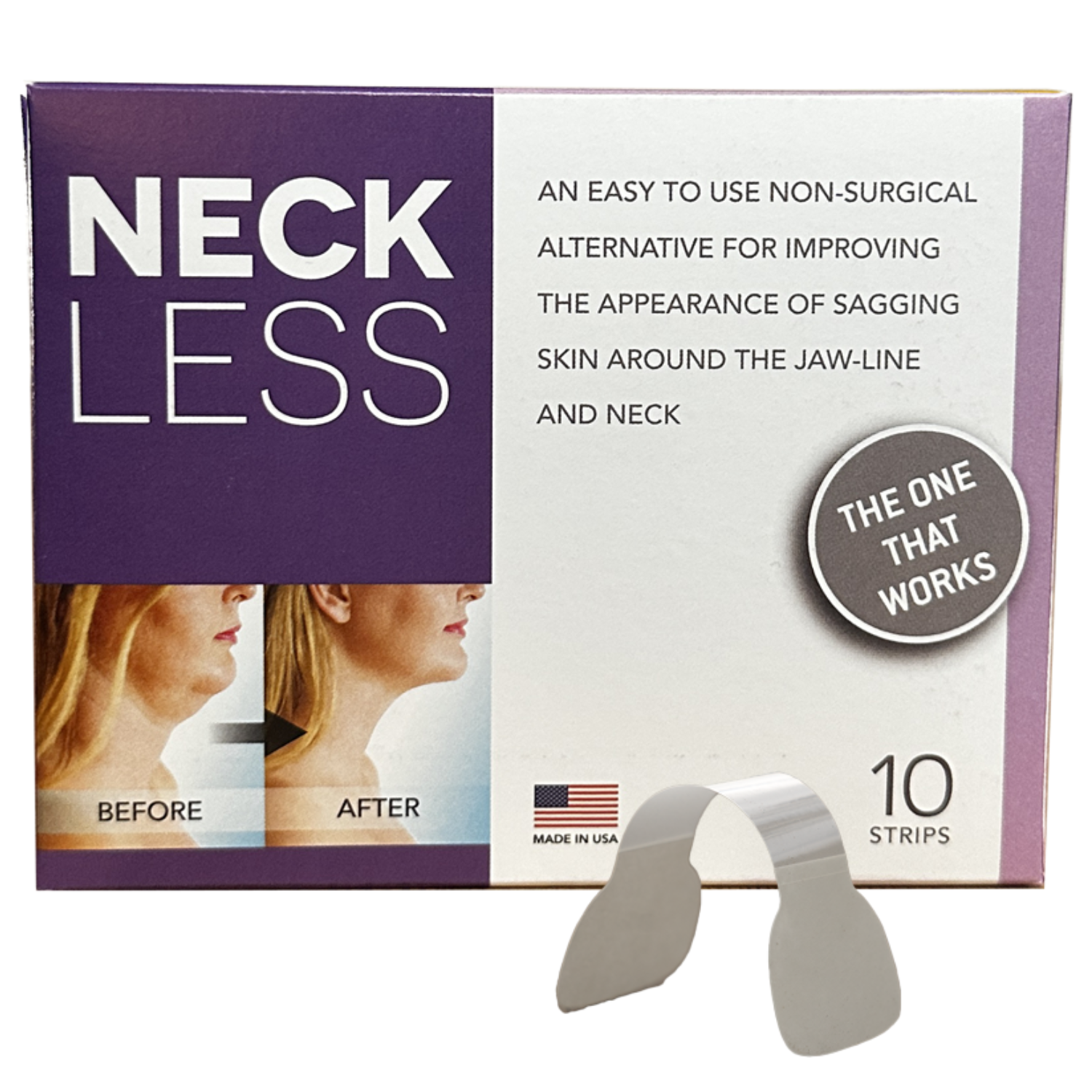
Step 5 — Lifting support on days that matter. A Neck Less lifting strip applied after SPF has absorbed gives you an immediate physical result that no skincare ingredient can replicate on the same timeline. The topicals do their work over months. The strip does its work in minutes. Starting with a 10-strip pack lets you test the result before committing to a larger supply.
The Complete Evening Routine
Step 1 — Thorough cleanse. Remove sunscreen, environmental buildup, and any adhesive residue from a lifting strip. A micellar water or oil-based cleanser works well. Use gentle upward pressure, no tugging or pulling on neck skin.
Step 2 — Hyaluronic acid (optional but beneficial). Applied to slightly damp skin before moisturizer, particularly useful for anyone dealing with crepey texture or significant dryness in the neck area.
Step 3 — Retinoid (if using). Applied every second or third night to start, building frequency gradually. On nights you skip the retinoid, apply a peptide serum instead.
Step 4 — Ceramide moisturizer. A richer formula than the morning moisturizer, applied from collarbone to jaw. This is the step that supports the skin barrier overnight and helps retain the moisture that neck skin loses quickly.
Addressing Tech Neck Specifically
Tech neck deserves its own note because it is driving neck skin concern in a younger demographic than traditional turkey neck, and it responds to slightly different priorities in a routine.
The horizontal lines that form from repetitive flexion of the neck forward are crease lines, not purely laxity lines. They are accelerated by the same collagen loss that drives all neck aging, but the mechanical component means that ingredient routines alone address only part of the problem. Posture awareness during screen use reduces new crease formation. Consistent retinoid use at the neck specifically targets the cell turnover that keeps existing creases from deepening. Hyaluronic acid and ceramide-rich moisturizers keep the skin hydrated enough to minimize the appearance of lines that are already present. And a lifting strip repositions the skin along the jawline, which visually reduces the impact of horizontal neck lines by lifting the tissue above them.
For a full breakdown of what causes turkey neck and tech neck at the structural level, the science behind turkey neck covers both in detail.
What to Avoid on Neck Skin
A few common mistakes that make neck skin care less effective or cause active harm:
Fragrance in neck products. Neck skin is more reactive than facial skin, and fragrance is one of the most common sources of contact irritation in this area. Avoid heavily fragranced body lotions and essential-oil-heavy formulas on the neck specifically, even if your face tolerates them.
High-concentration acids applied directly to the neck. Glycolic acid at 10 percent or higher, strong lactic acid formulas, and salicylic acid at therapeutic concentrations are generally too aggressive for regular use on neck skin. Gentle lactic acid at 5 percent used weekly is a reasonable exception for texture improvement.
Pulling or tugging during application. Always apply products in upward strokes and use light pressure. Mechanical downward pulling on neck skin repeatedly over years contributes to the laxity you are trying to minimize.
Skipping the neck during SPF application. Already covered above, but worth repeating here as the most consequential omission in most neck skin care routines.
How Neck Skin Care Fits the Bigger Picture
A good neck skin care routine is the foundation. It slows the progression of visible aging, improves skin quality over time, and is the lowest-cost investment in the category. But it is honest to say that topicals have a ceiling, and that ceiling is lower for neck skin than for facial skin because the structural changes that drive visible neck aging happen in deeper tissue layers that topical ingredients cannot fully reach.
For women with established laxity who want a result that goes beyond what a skincare routine can deliver, the options range from at-home devices to clinical treatments to surgical correction. At-home neck tightening devices build on the foundation a skincare routine creates. Clinical non-surgical options go further. And neck contouring without surgery covers how all of these approaches combine into a practical, layered strategy.
The women who are happiest with their necks at 60 are almost universally the ones who started their neck skin care routine well before it felt urgent. The routine you build now is the investment that pays off in a decade. Start with SPF tomorrow morning. Build from there.
Complete your neck care routine with physical support that works the same day. Shop Neck Less lifting strips in 10, 25, 50, or 100-pack options. Patented. Made in the USA. 30-day money-back guarantee.
Hope Granger is a beauty and wellness writer who has spent over a decade covering non-surgical skincare, aging gracefully, and women's confidence. She writes for women who are done being sold false promises and just want honest answers.